
Summit Eye Center Blog
You Doctor Says You have Glaucoma...Now What?
Your doctor says you have glaucoma…now what?
Glaucoma is treated by lowering the pressure in the eye below its “normal” range. All studies show that lowering your eye pressure is effective at treating glaucoma, whether you start with a high pressure or one that is considered normal.
How do I lower my eye pressure?
Typically, the first option to lower your eye pressure is either an eye drop you use once a day at night, or a laser procedure called SLT.
If we look at all glaucoma patients, well over half require more than one treatment to keep their pressure under control. There are numerous medication eye drops that can be considered that are dosed either once or twice a day. There are also minimally invasive glaucoma surgeries, MIGS, that can be done to get your pressure where it needs to be.
How does my doctor determine where my pressure needs to be?
Your doctor will make note of where your natural pressure is prior to starting any treatment. They will then try and lower your pressure by about 30% with the initial treatment.
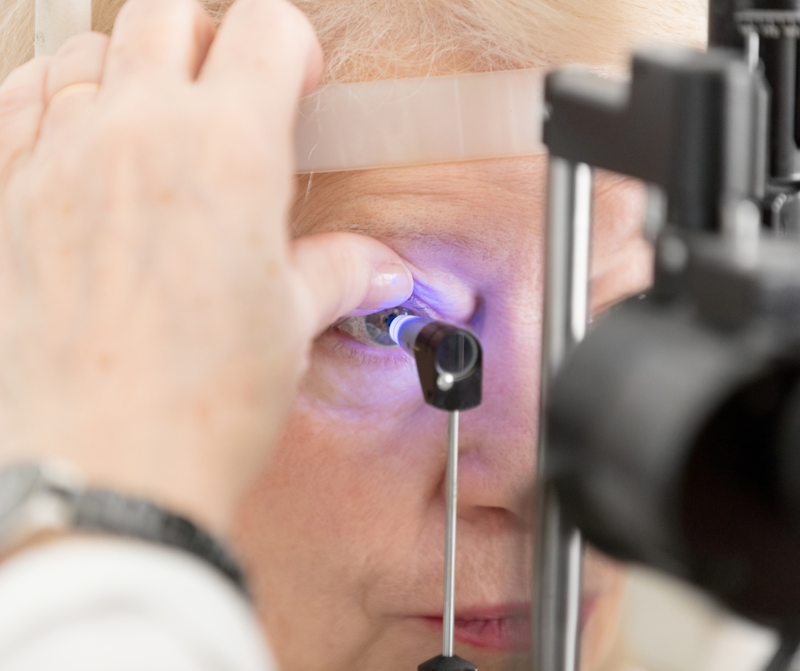
Your doctor will follow you at regular intervals of 3, 4 or 6 months, depending on each individual situation. At these visits your doctor will measure your eye pressure and examine your optic nerve with a microscope. They will also likely do either a visual field test or automated exam of the optic nerve called an OCT. It is also common for your doctor to take pictures of your optic nerves annually.
With the information gathered during these examinations, your doctor will determine if your glaucoma is being adequately controlled with the current treatment or if additional treatment is required to control your glaucoma.
How frequently do I need my eyes checked if I have glaucoma?
When you are newly diagnosed with glaucoma, you doctor will likely see you more frequently…probably every 3-4 months. These visits are used to give your doctor an idea of how sever your glaucoma is. These visits are also used to help determine if you are a “fast progressor” or a “slow progressor”.
The severity of glaucoma also dictates how frequently you need to be watched. Someone with mild glaucoma who has been treated for a few years may only need to be seen every 6 months. Whereas someone with more advance glaucoma will likely need to be seen every 3-4 months.
The number one goal of glaucoma treatment is to prevent blindness. It is also a goal to prevent or minimalize the impact of glaucoma on your daily activities such as driving and reading.
Once a person has glaucoma, it is something you and your doctor will continually manage for the rest of your life. All 3 locations of Summit Eye Center have the advanced technology required to diagnose and manage glaucoma for our patients.

